
The Letter Read at the Pulpit
At her father’s funeral last Tuesday, a stranger walked up the aisle, asked permission to speak, and read a letter that emptied half the church before she finished.
At Reverend Earl Williams’s funeral last Tuesday at Mount Olive Baptist Church on Chicago’s South Side, every pew was full. Eight hundred members of his congregation came to mourn him. The mayor sent a representative. Three other pastors gave eulogies. The choir of forty voices sang for thirty minutes. His widow Doris sat in the front pew with their three grown children. Everything was dignified, beautiful, and exactly the funeral a respected senior pastor of forty-one years deserved. Until the senior deacon, just before the casket was closed, asked if anyone else wished to speak. A thirty-eight-year-old Black woman in a simple black dress rose from the back pew. Nobody recognized her. She walked slowly up the center aisle. She placed a small black purse on the lectern. She unfolded a yellowed letter that had been waiting forty-one years to be read aloud. And before she had finished reading it, sixty people had quietly stood and followed her out of the church.
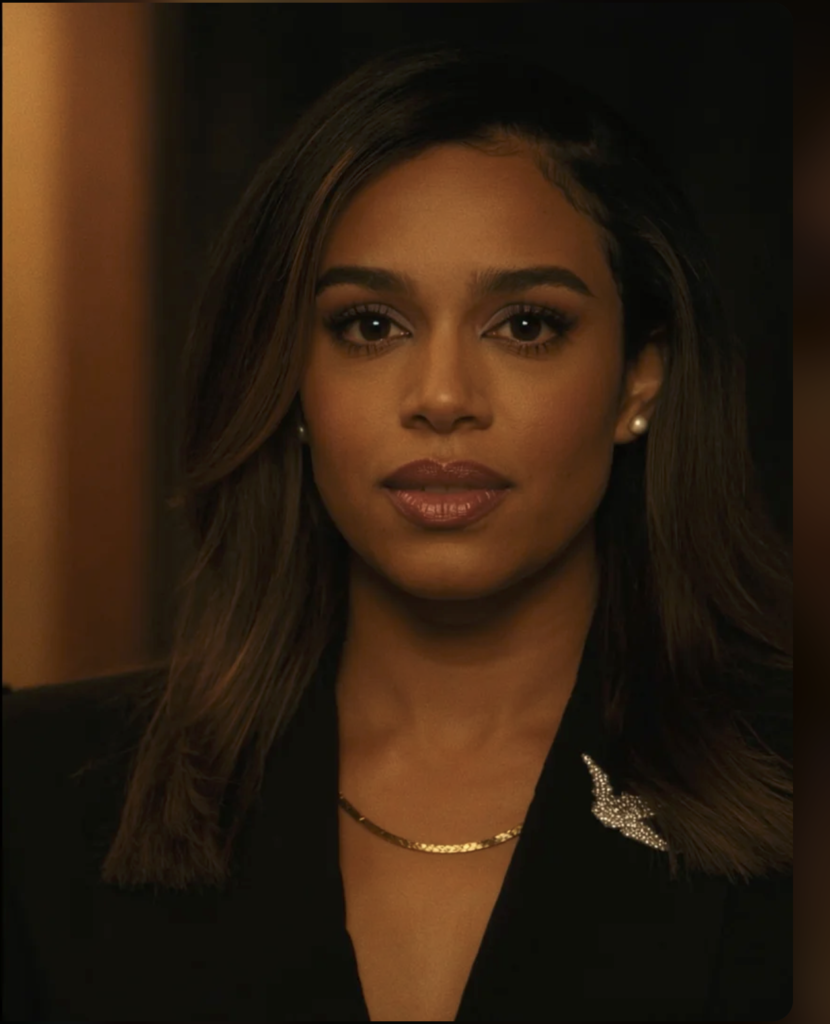
Her name was Naomi Carter.
She was thirty-eight years old. She was a registered nurse at Methodist Le Bonheur Hospital in Memphis, Tennessee. She had two children, a husband named Devon, a small house in the Cooper-Young neighborhood, and a faded photograph on her bedroom dresser that she had looked at every morning since she was nine years old. The photograph was of her mother, Rosalind Carter, who had died of pancreatic cancer in November of 2011 at the age of fifty-four.
Rosalind Carter had never married. She had raised Naomi alone in Memphis with the help of her older sister, who Naomi had called her aunt. Rosalind had worked as a third-grade teacher for thirty-one years. She had lived in the same small bungalow in Cooper-Young from 1985 until the day she died. She had been a quiet, dignified, gentle woman who attended a small Baptist church on Sundays and who had taught her daughter to forgive people who had hurt her, including, eventually, the man who had loved her once and chosen something else.
Naomi did not know who that man was until October of 2011, three weeks before her mother died.
What Her Mother Told Her
In October of 2011, Rosalind was in hospice care at her sister’s home. The cancer had spread to her liver and pancreas. The doctors had given her four to six weeks. She had refused chemotherapy in the spring. She had been preparing for her death since June. She had organized her papers. She had written letters to her two grandchildren that they were not to open until they were eighteen. She had given away most of what she owned.
On a Wednesday afternoon in late October, she asked Naomi to sit with her. Naomi was twenty-three years old at the time. She was a senior at the University of Memphis, studying nursing. She had been driving to her aunt’s house every afternoon after class to sit with her mother. She brought her a small thermos of weak chamomile tea. She held her hand. They talked about small things — the neighbors, the weather, the way the maple tree in the front yard was turning gold.
That Wednesday, Rosalind held her daughter’s hand and said, quietly, “I need to tell you something I have not told you. I should have told you a long time ago. I am going to tell you now.”
Naomi waited.
“Your father is a man named Earl Williams. He is a Baptist pastor in Chicago. He has a wife and three children. He has been a pastor for forty years. He is well-known in his community. He did not know I was pregnant when he left.”
Naomi did not speak. She had been told, for twenty-three years, that her father had been a man named Theodore Carter — Rosalind’s maiden name was Carter, and Theodore was the first name her mother had given the hospital when Naomi was born. There had been no Theodore. There had never been a Theodore. The name had been invented by Rosalind on the day of Naomi’s birth in August of 1987 to keep a secret she had decided, at twenty-eight years old, to carry alone.
Rosalind continued.
“I met him in January of 1985. I was twenty-five years old. He was forty. He was traveling on a revival tour through Memphis. He preached at my church for one Sunday. I was teaching third grade then. I went to his sermon. I went to a small reception afterward at the parish hall. We spoke. We spoke for two hours. He came back the next week. He had requested to extend his stay in Memphis for another six weeks of preaching, to oversee a revival that was happening at three different congregations in town.”
“By the end of the second week, we were in love. By the end of the third week, he had asked me to marry him. I knew he was married. I had read it in the program at his first sermon. He told me his marriage had been a contractual arrangement his bishop had encouraged in 1976. He told me he loved his children but he had never been in love with Doris. He told me he wanted to leave her. He told me he could not live without me. I believed him. I still believe him. I think he believed himself when he said it.”
She paused. Her voice was weak but steady.
“We were married on January the eleventh, 1985, in the Memphis courthouse. Two witnesses. A justice of the peace. He had bought me a small gold band that I returned to him in March, when he left. We were happy for seven weeks. He stayed in a small apartment he had rented for the revival. I would visit him after work. We made plans. We were going to tell his bishop and his wife in the spring. We were going to move to Memphis together. He was going to start a small ministry.”
“On the night of March the eleventh, his bishop called him from Chicago. The bishop had received an anonymous letter — we never learned from whom — that exposed our marriage. The bishop told Earl that if he did not return to Chicago and to Doris within the week, he would be defrocked, the church would be informed, his children would be told publicly, and his career would end. Earl asked the bishop for time to think. The bishop gave him forty-eight hours.”
“On the night of March the thirteenth, Earl came to my apartment. He told me what had happened. He cried. He told me he could not be the man he wanted to be. He told me he was going home. He left me a letter and an envelope with five thousand dollars in cash. He asked me to forgive him. He left at four in the morning.”
“I did not know I was pregnant until April. I was almost three months along by the time I realized. I did not contact him. I had signed nothing. He had asked nothing of me. He had only asked me to forgive him. I decided that night I would. I decided I would keep the baby. I decided I would never tell him. I decided I would not allow my child to be the reason a good man’s life was destroyed. I made that decision alone, Naomi. He never had a chance to make it with me.”
She stopped. She looked at her daughter for a long time.
“He has been sending me money since 1989. Five hundred dollars every December. He never wrote a letter. He never called. He never tried to contact me directly. But somehow he had the address. I suspect my sister wrote to him in 1988 — she has admitted nothing but I have suspected for years. The money came every year, on the twelfth of December, in cash. I never spent it. I put it in a savings account in your name. There is forty-three thousand dollars in that account now. You will need it for nursing school next year. It is yours. He sent it to his daughter, even though he had never seen her face. I want you to know that.”
She squeezed Naomi’s hand.
“He kept his promise. He stayed away. But he sent the money. Every year. For twenty-two years now. He did the only thing a man in his position could do. I have forgiven him, Naomi. I forgave him in 1987 when I held you for the first time. I want you to know that. I want you to know I have not been bitter.”
The Letter
Rosalind reached over to the small wooden box on her bedside table. She had been keeping it there for the past month. She had not let Naomi look inside.
She opened it. She removed a yellowed envelope. She handed it to her daughter.
“This is the letter he left me on the night of March the thirteenth, 1985. I have kept it. I have not read it in fifteen years. I cannot remember every word now, but I remember enough. I want you to have it.”
Naomi opened the envelope carefully. The paper inside was thin and yellowed but the handwriting was clear, unmistakable, the careful penmanship of a man who had been taught cursive in a Mississippi schoolhouse in the 1950s.
The letter said:
Rosalind —
I have made my decision. I cannot stay. The bishop has threatened to defrock me. He has threatened to expose us to Doris. He has threatened the church. He has used the word destroy more than once tonight, and I do not believe he is bluffing.
You and I were married in the Memphis courthouse on January the eleventh, 1985, in the presence of God and two witnesses. I meant every word of those vows. I meant them then and I mean them now. I am not the man tonight that I was on January the eleventh. The man tonight is a coward.
I am leaving you five thousand dollars. It is everything I have that is mine alone. I am asking you to forgive me. I do not expect that you will. I will spend the rest of my life trying to deserve forgiveness anyway.
I will not contact you. I will not look for you. I will pray for you every morning at six. If you ever have a child, and that child ever needs anything, you must write to the address I have given you. I will respond. I do not deserve to know my own child. But the child will deserve a father, in any form he or she can have one.
I am very sorry, Rosalind. I will be sorry until the day I die.
— Earl
Naomi finished reading. She looked up at her mother. Rosalind was watching her with calm tired eyes.
“He kept his promise about the money,” Rosalind said softly. “I want you to know that. The address he gave me — I never wrote to it. I burned it the day after I read this letter. I did not want to be the woman who came back and asked for things. I wanted to be the woman who raised her child alone, and well, and on her own terms. I have done that. You are my proof.”
She paused.
“I am going to ask you to do one thing for me, Naomi. One thing only. It is the only thing I will ever ask you to carry.”
“What is it, Mama?”
“I want you to keep this letter. I want you to take it home with you. I want you to put it in a safe place. And I want you to promise me that you will only read it aloud at one of two funerals. Mine. Or his. Whichever comes later.”
She squeezed Naomi’s hand again.
“His was supposed to come first, my love. He was fifteen years older than me. He was supposed to die first. I was supposed to read it at his funeral myself. I was not supposed to be the one who went first. I want you to read it for me. I want you to stand at his pulpit. I want you to read it slow. I want you to introduce yourself. I do not want any of his family to ever wonder, the rest of their lives, who the woman in the back of the church was.”
“I am not asking you to be cruel, Naomi. I am asking you to be honest. He was a good man who failed me once. He spent forty years atoning quietly. I want his church to remember him correctly. I do not want him to be remembered as a saint. He was not a saint. He was a man. I want him remembered whole.”
Naomi sat with her mother for a long time without speaking. The afternoon light through the window had turned amber. The maple leaves outside were turning gold.
She said, finally, “I promise, Mama.”
Rosalind nodded once. She closed her eyes. She slept for a long time.
She died three weeks later.
Fourteen Years of Waiting
For fourteen years, Naomi kept the letter in a small fireproof safe in her bedroom closet in Memphis. She did not look at it often. She knew where it was. She knew what it said.
She married a kind man named Devon Carter in 2014 — a coincidence of surnames that her mother would have laughed at, had she lived to see it. They had two children, Marcus in 2016 and Ruth in 2019. She named them after no one in particular. She did not name her son after his unknown grandfather. She did not want her children to live under the weight of a story they had not chosen.
She watched, from a distance, for fourteen years. She did not contact Reverend Earl Williams. She did not write to him. She did not visit Chicago. But she did read the Chicago Defender online from time to time. She knew when his church had its hundred-year anniversary in 2018. She knew when he was awarded a community service citation by the mayor of Chicago in 2021. She knew when his middle daughter Sarah was named principal of a public school in Hyde Park in 2022.
She knew, by the way she could feel things across a great distance, that he was a good man. That her mother had been right. That he had been atoning, quietly, for forty years.
The money continued to arrive every December. After her mother’s death, Naomi had not known whether to expect it. She had assumed he had been sending it to Rosalind, and that Rosalind’s death would end it. But on December the twelfth, 2012, the year after her mother died, a small envelope arrived at her aunt’s house in Memphis. Inside was five hundred dollars in cash. There was no note. There was no return address. The handwriting on the envelope was Earl Williams’s.
He had found her. He had known her mother had died. He had decided, on his own, to keep sending the money. To her now. To his daughter.
She kept every envelope. She put every five hundred dollars into a small savings account in her children’s names. She had never spent a dollar of it. There was sixty-three thousand dollars in that account by May of 2026, when she received the call from a stranger in Chicago that Reverend Earl Williams had died of a heart attack in the parking lot of Mount Olive Baptist Church on a Sunday morning.
The call came from a man named Walter, an elderly deacon at the church. He had been told, by Earl, twelve years earlier, to call this number if anything ever happened. He had been keeping the number in a sealed envelope in his desk drawer. He had been waiting twelve years to call it. He had wept, on the phone, when he finally did.
Naomi bought a plane ticket the same day.
The Funeral
She arrived in Chicago on the Monday night before the funeral. She checked into a small hotel near Hyde Park. She did not contact the family. She did not contact the church. She did not introduce herself to anyone. She sat in her hotel room and re-read her mother’s letter for the first time in three years. She slept poorly. She woke at five in the morning. She prayed for a long time.
She arrived at Mount Olive Baptist Church at twelve forty-five on Tuesday afternoon, fifteen minutes before the service was scheduled to begin. The church was already packed. Eight hundred mourners in black. She took a seat in the very back row, on the aisle, in the seat closest to the exit. She kept her purse on her lap. The letter was inside it.
The service began at one o’clock. The choir sang. The associate pastor — Earl’s youngest son, David — gave the welcome. The eldest son, Marcus, a corporate lawyer, gave the first eulogy. He was articulate, dignified, composed. He spoke about his father’s commitment to the community. About the early years in the 1970s when the church had been small and his father had been twenty-eight years old and full of vision. About the way his father had baptized over a thousand people in his forty years at the pulpit.
A bishop from the regional convention spoke after Marcus. A councilman spoke after the bishop. The middle child, Sarah, the high school principal, gave the final family eulogy. She wept once, briefly. She spoke about her father as a private man. About how he had read the Bible at the kitchen table every morning at six. About how he had whistled when he gardened. About how she had never seen him angry, not once, in thirty-nine years.
The choir sang one more hymn — Precious Lord, Take My Hand.
Then the senior deacon, an elderly man named Brother Solomon, stepped to the lectern. He said, “Before we close the casket, is there anyone else who wishes to share a memory of Reverend Williams?”
Naomi stood up.
She walked slowly down the center aisle. Every face turned to look at her. The widow Doris Williams, in the front pew, watched her come. Doris was sixty-eight years old. Her hair was silver. She wore a black hat with a small veil. She did not move. She had been told, in March of 1985, that her husband had married a woman in Memphis. He had confessed to her on the night he returned home. She had spent forty years deciding whether to forgive him. She had eventually decided yes. She had asked him only one thing — that he take the secret to his grave. He had taken it. Naomi was about to undo that.
Doris had been waiting forty years for this woman to arrive.
Naomi reached the pulpit. She placed her small black purse on the wooden lectern. She removed the yellowed envelope. She unfolded the letter slowly. She lifted her eyes to the eight hundred faces in the church.
She spoke softly, but the church was so silent that her voice carried to the very back.
“My name is Naomi Carter. I am a registered nurse in Memphis, Tennessee. I am thirty-eight years old. Reverend Earl Williams was my father. My mother, Rosalind Carter, died of pancreatic cancer in November of 2011.”
A small wave of movement went through the church. Heads turned. Whispers. The eldest son Marcus rose halfway out of his seat. Doris reached over and put her hand on his arm. He sat back down.
“Before she died, my mother made me promise I would only read this letter aloud at one of two funerals. Hers. Or his. This letter was written by Reverend Earl Williams in March of 1985. To my mother. Seven weeks before he was forced to choose between her and his bishop. I will read it now.”
She read the letter slowly. Every word. The full text. She did not skip anything. Her voice was clear and steady. The church was completely silent.
When she finished reading the letter, she folded it carefully. She placed it inside her purse. She looked up.
“My mother and Reverend Williams were married on January the eleventh, 1985, in the Memphis courthouse. Their marriage lasted seven weeks. He returned to his wife on March the fourteenth. He did not know my mother was pregnant. She did not tell him. She raised me alone. He sent her five hundred dollars in cash every December for twenty-two years. After my mother died, he found me. He sent the money to me. He did this for thirty-six years. I have never spent any of it. I have it in a savings account for my children.”
She paused.
“I am not here for money. I do not want any part of his estate. I do not want to be acknowledged by this family. I have a life. I have a husband. I have two children. They are my father’s grandchildren. They will never need anything from any of you. I came because my mother asked me to.”
“She asked me to make sure the truth was spoken once, in front of his church, before he was buried. So that he would be remembered correctly. Not just as the man who built this congregation, but as the man who failed my mother in 1985, and who spent forty years afterward atoning quietly, in a way none of you saw.”
“He kept the address of every house we lived in. He sent five hundred dollars every December for thirty-six years. He prayed for my mother every morning at six. He never met me. I never met him. But I want you to know — Doris, Marcus, Sarah, David — that I do not hate him. I do not hate you. I do not hate this church. I came to honor my mother and to give your father back to you whole, instead of the half of him you knew.”
She walked the three steps from the lectern to the open casket. She placed the letter on the lid. She kissed two fingers. She touched the wood.
“Goodbye, Daddy. Mama said to tell you she forgave you the morning she died.”
She turned. She walked back down the center aisle. She did not look at the family in the front pew. She did not look at anyone. About sixty people quietly stood and followed her out of the church. The two deacons. The city councilman. A retired professor of theology from the University of Chicago. A handful of older church members who had known Earl Williams since 1985 and who, in their hearts, had always sensed there had been something. They could not have said what. But they had known. And they stood. And they followed her out.
Doris Williams sat in the front pew. She did not cry. She closed her eyes. She had been waiting forty years for this exact moment. She had not known, before today, what it would feel like. It felt like being seen, finally, in a way she had not been seen for forty years. Her husband’s secret was now her church’s secret. The weight she had carried alone since March of 1985 was no longer hers alone.
She found, to her own quiet surprise, that she was relieved.
The Wooden Box
That night, at nine-thirty in the evening, there was a knock on the door of Naomi’s hotel room.
She had not eaten dinner. She had been sitting on the edge of the bed for three hours, holding her phone, talking quietly with her husband Devon in Memphis. He had been crying with her. She had been telling him about the moment she placed the letter on the casket. About the silence. About the sixty people who had followed her out.
She told Devon she would call him back. She got up. She opened the door.
Sarah Williams was standing in the hallway.
She was thirty-nine years old. She was a high school principal. She had her father’s jaw and her mother’s eyes. She was wearing the same matte black mourning dress she had worn at the funeral. She had been crying for six hours. Her makeup was gone. She was holding a small wooden box in both hands.
“My name is Sarah,” she said quietly. “I am your sister. I have been trying to find a way to come here since two o’clock this afternoon. I am sorry it took me until now.”
Naomi did not speak.
“I drove home from the funeral with my mother. I sat with her for three hours. She told me everything. I went to my father’s office at the church. I had a key. I had not been in his office, alone, in years. I went through his desk. I found this in a locked drawer. The key was in his wallet. The lock was simple. I opened it. I think it was meant for you. He never had the courage to give it to you. I want you to have it.”
She held out the box.
Naomi took it slowly. She brought it into the hotel room. Sarah followed her in but stayed standing by the door, as if she did not feel she had the right to sit down. Naomi sat on the edge of the bed. She placed the box on her lap. She opened it.
Inside were thirty-six photographs.
One for every year of Naomi’s life.
The first was a small Polaroid of Naomi as an infant, perhaps two weeks old, sleeping on her mother’s chest. It was dated September 1987 in pencil on the back. The next was a photograph of Naomi at age two, sitting in a high chair, smiling, holding a slice of birthday cake. The next was a school portrait from kindergarten. The next was Naomi’s elementary school graduation. Her middle school graduation. Her high school graduation. A photograph of her at her white-coat ceremony at the University of Memphis School of Nursing in 2012. A photograph of her wedding in 2014. A photograph of her holding her newborn son Marcus in 2016.
The final photograph was from 2025. It was a casual photo of Naomi at a community picnic in Memphis, laughing, her daughter Ruth on her shoulders.
Naomi understood, slowly, what she was looking at.
Her aunt — Rosalind’s older sister — had been sending photographs of Naomi to Earl Williams for thirty-six years. She had never told Rosalind. She had never told Naomi. She had quietly, every year, mailed him a small envelope with one or two photographs of his daughter. He had kept every one. He had looked at them, alone in his office, on his birthday, every year.
Naomi held the photographs in her lap for a long time. She did not cry. She did not move.
She looked up at Sarah, who was still standing by the door, shaking, waiting.
Sarah said, very quietly, “I have wanted a sister my whole life. I always knew, in some way, that there was someone missing. I do not know what you want from us, or what we have any right to ask of you. But I would very much like to know you. If you will let me.”
Naomi closed the box gently. She set it on the bed beside her. She stood up. She crossed the small hotel room. She opened her arms.
Sarah walked into them.
They stood in the doorway of a Hyde Park hotel room at nine forty-five at night holding each other for a very long time. Neither of them spoke. Sarah cried quietly into her older sister’s shoulder. Naomi did not cry. She held her younger sister the way her mother had held her, when she was nine years old and afraid of thunderstorms — firmly, completely, with no part of herself held back.
They talked until morning.
Sarah told Naomi about their father — the small things, the private things, the man none of the eight hundred mourners had known. About the way he had read poetry on Sunday afternoons. About the way he had whistled when he gardened. About the way he had cried, only once that she had ever witnessed, when his own father had died in 1996. About how, in his last years, he had sometimes sat for hours in his office in the evening, looking at something in his desk drawer that he would not let any of them see.
Naomi told Sarah about Rosalind. About the small bungalow in Cooper-Young. About the maple tree in the front yard. About the way her mother had taught her, when she was eleven, to make biscuits from scratch. About the way her mother had forgiven their father in 1987, the morning Naomi was born, and had never once spoken a bitter word about him in twenty-four years.
They talked about their children. About their husbands. About their work. About the small details of two lives that had been lived eight hundred miles apart and that had, until that night, been entirely separate.
At six in the morning, Sarah finally fell asleep on the couch in Naomi’s hotel room. Naomi covered her with a blanket. She sat in the armchair by the window. She watched the Chicago sky turn from black to grey to the first pale gold of dawn.
She thought about her mother. She thought about her father. She thought about the woman in the front pew of the church the day before, Doris, who had carried this secret alone for forty years and who had not once turned around to look at the woman in the back of the church during the funeral. She thought about the sixty people who had stood and followed her out, and what they had been carrying, all of them, that she would never know.
She thought about the way her mother had told her, three weeks before she died, that she had forgiven Earl Williams in 1987 and had not been bitter for twenty-four years afterward.
She thought about Sarah, asleep on the couch, who she had not known existed twenty-four hours earlier.
She thought: My mother was right. There was room at the end of all of this for something good.
The sun came up over Lake Michigan. The city of Chicago slowly began to move. Somewhere on the South Side, a widow named Doris Williams was making coffee in a quiet house, alone for the first morning in forty-one years.
Naomi Carter sat in her hotel armchair and watched the light come.
Continue Reading
More stories you’ll love
The Woman at Pew Seven
Every pew at the funeral was full — except for the one in the back, where a woman nobody recognized had been waiting fifty-five years to say goodbye…
The Name She Never Used
She buried it for sixty-two years. Then a ten-year-old girl handed her an envelope at brunch…
The Coffee Lady
For 30 years they laughed at her cheap shoes. They never noticed the notebook in her purse…